
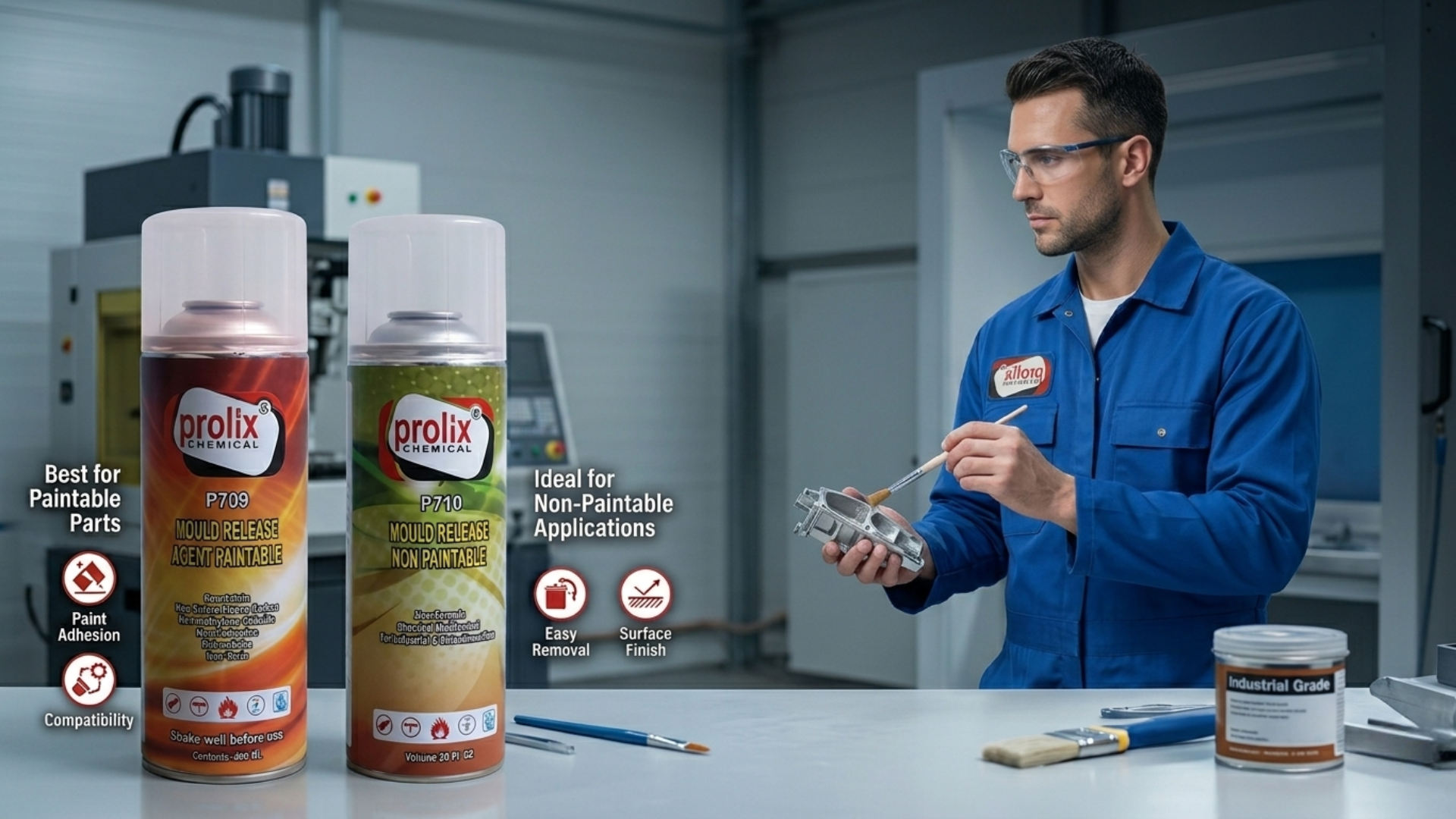
🏭 Mold Release Paintable vs Non Paintable: Complete Guide
Mold release agents are essential in modern manufacturing processes. They are specially formulated chemicals used to prevent molded parts from sticking to mould surfaces, ensuring smooth production and high-quality finishes.
This article explains the differences between paintable and non-paintable mold release agents, their benefits, and how they are used across various industries.
🧪 What is a Mold Release Agent?
A mold release agent is a chemical solution designed to:
- Lubricate mould surfaces
- Prevent sticking during demolding
- Improve product surface quality
- Extend mould lifespan
These agents are widely used in industries such as plastic, rubber, resin, and metal casting.
⚖️ Paintable vs Non-Paintable Mold Release
Understanding the difference is crucial when selecting the right product.
🔹 Paintable Mold Release
Paintable mold release agents are designed for applications where the final product requires painting, coating, plating, or finishing.
Key characteristics:
- No residue that interferes with coating
- Prevents defects like fish-eyes
- Compatible with bonding, laminating, and welding
- Provides a clean and smooth surface
Typical use cases:
- Automotive parts
- Electronic components
- Plastic parts with finishing processes
🔹 Non-Paintable Mold Release
Non-paintable mold release agents are typically silicone-based and focus on maximum release performance.
Key characteristics:
- Excellent lubrication and release
- Fast drying
- Leaves a thin silicone layer
- Not suitable for painting or coating
Typical use cases:
- General plastic molding
- Rubber production
- Die casting
- Applications without post-finishing
⚙️ Key Benefits of Mold Release Agents
Using the right mold release agent provides:
✅ Easier part release
✅ Reduced defects and damage
✅ Faster production cycles
✅ Improved surface finish
✅ Lower maintenance cost
✅ Extended mould life
🏭 Industrial Applications
Mold release agents are widely used in:
- Plastic industry (injection molding)
- Rubber manufacturing
- Epoxy, phenolic, melamine, and PVC resins
- Aluminium and zinc die casting
- Concrete and decorative moulding
🧠 Understanding Injection Molding
Injection molding is a manufacturing process where melted thermoplastic material is injected into a mould and cooled to form solid parts.
This method is used to produce:
- Automotive components
- Electronic devices
- Household items
- Industrial parts
Due to its efficiency, injection molding accounts for a large portion of plastic production worldwide.
🚀 How to Use Mold Release Agent
For optimal results:
- Clean the mould surface from dirt, carbon, and residue
- Spray evenly from a distance of 20–30 cm
- Apply a thin and uniform layer
- Continue with the molding process
🎯 How to Choose the Right Mold Release?
Choose paintable if:
- Your product needs painting or coating
- Surface quality is critical
Choose non-paintable if:
- Maximum release performance is needed
- No finishing process is required
📈 Why Mold Release Matters in Industry
Without proper mold release agents:
- Products may stick and get damaged
- Production slows down
- Costs increase due to defects
Using the right solution ensures efficiency, consistency, and cost savings in manufacturing.
📞 Need the Right Mold Release Solution?
Choosing the right chemical product is not just about the formula—it requires proper application and technical understanding.
PT Citra Trinindo Indonesia provides:
- High-quality mold release agents
- Technical support & consultation
- Custom solutions for industrial needs
👉 Contact us to get the best recommendation for your production process.
Direvisi oleh adminDG