
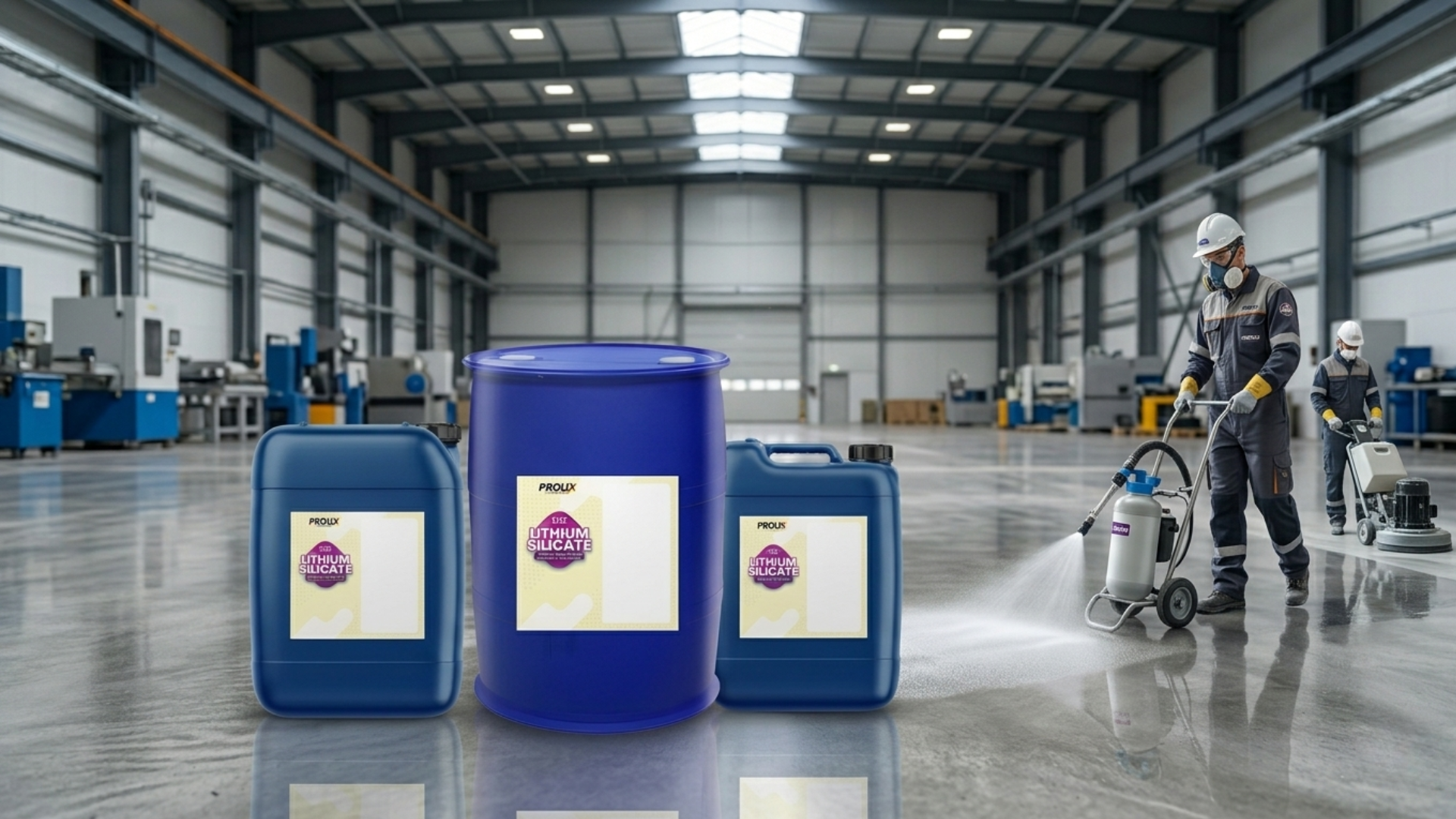
Lithium Silicate is a premium concrete densifier and chemical hardener based on lithium silicate chemistry. Unlike surface coatings or sealers that sit on top of concrete, Lithium Silicate penetrates deep into the concrete matrix, triggering a permanent chemical reaction that hardens, densifies, and strengthens the floor from within.
Widely adopted across industrial, commercial, and institutional construction projects worldwide, Lithium Silicate has become the go-to choice for contractors, facility managers, and polished concrete specialists who demand long-lasting results with minimal maintenance.
In this complete guide, we cover everything you need to know about Lithium Silicate — how it works, its key functions and benefits, where to use it, how it compares to other silicate densifiers, and step-by-step application guidance.
What Is Lithium Silicate?: lithium silicate ultimate
Lithium Silicate is an inorganic chemical compound (Li₂SiO₃) dissolved in water to create a clear, ready-to-use liquid. When applied to a concrete surface, the solution penetrates into the pores and reacts with calcium hydroxide (Ca(OH)₂) — a natural byproduct of cement hydration — to produce insoluble calcium silicate hydrate (CSH) crystals that permanently fill the pores of the concrete.
This process is known as internal densification — the concrete is made denser, harder, and more resistant to damage from the inside out, not just treated at the surface. Because the reaction is chemical and permanent, the results do not wear off, peel, or require reapplication like conventional coatings.
What sets Lithium Silicate apart from other silicate-based densifiers — namely Sodium Silicate and Potassium Silicate — is its exceptionally small molecular size. This allows it to penetrate deeper into the concrete matrix, react more completely, and deliver superior hardening performance.
Lithium Silicate vs Sodium Silicate vs Potassium Silicate – Side-by-Side Comparison
| Feature | Lithium Silicate | Sodium Silicate | Potassium Silicate |
|---|---|---|---|
| Molecular Size | Nano (smallest) | Medium | Large |
| Penetration Depth | Very Deep | Moderate | Shallow |
| Hardening Strength | Superior | Moderate | Moderate |
| ASR Risk (Alkali-Silica Reaction) | Very Low | High | Moderate |
| Long-Term Durability | Permanent | Degrades Over Time | Degrades Over Time |
| Suitable for Polished Concrete | ✅ Yes | ⚠️ Limited | ⚠️ Limited |
| Surface Residue Risk | Very Low | High (white haze) | Moderate |
| Price Point | Premium | Budget | Mid-range |
While Lithium Silicate comes at a higher price point, its superior penetration, permanent results, and dramatically lower maintenance costs make it the most cost-effective densifier choice over the long term — especially for industrial and commercial applications where floor performance is critical.
Key Functions of Lithium Silicate
Lithium Silicate is a true multifunctional concrete treatment. Here are its primary technical functions:
- Internal Hardening: Chemically reacts with the concrete’s internal components to increase surface hardness — up to 4–6 times harder than untreated concrete — without adding any external layer.
- Porosity Reduction: Fills micro-pores and capillaries within the concrete matrix, making the surface denser, less permeable, and more resistant to liquids and contaminants.
- Dust-Proofing (Anti-Dust): Permanently eliminates concrete dusting — a common problem with aging or improperly cured concrete floors — by binding loose particles within the surface.
- Abrasion Resistance: Produces a harder, denser surface that resists scratching, scuffing, and wear from heavy foot traffic, forklifts, and industrial equipment.
- Polished Concrete Base Coat: Acts as an essential intermediate treatment in polished concrete systems, applied during the grinding process to densify the surface before final polishing stages.
- Liquid Repellency: Significantly reduces the absorption of water, oil, grease, and mild chemicals into the concrete surface, making floors easier to clean and maintain.
- ASR Mitigation: Unlike sodium silicate, Lithium Silicate does not contribute to — and may actually help mitigate — alkali-silica reaction (ASR), a form of concrete degradation caused by reactive silica in aggregates.
- Long-Term Stabilization: Protects concrete against carbonation, efflorescence, and chemical attack that gradually degrade untreated concrete over time.
Uses of Lithium Silicate
Lithium Silicate is suitable for a broad range of concrete flooring applications across residential, commercial, and heavy industrial environments:
1. Industrial Factory & Manufacturing Plant Floors
Factory floors are subjected to extreme conditions — constant forklift traffic, heavy machinery loads, chemical spills, and vibration. Lithium Silicate strengthens the concrete from within, dramatically increasing its ability to handle these stresses without cracking, dusting, or deteriorating. The result is a harder, cleaner, and safer working surface that holds up for decades.
2. Warehouses, Logistics Hubs & Distribution Centers
High-bay warehouses with racking systems require concrete floors that can withstand enormous point loads and constant pallet jack or forklift movement. Lithium Silicate densification reduces floor maintenance shutdowns and extends the service life of warehouse floors significantly — a large logistics hub retrofit project in 2024 achieved a 25% reduction in floor maintenance downtime using lithium-based densifiers.
3. Polished Concrete Systems
In polished concrete workflows, Lithium Silicate is applied as a chemical densifier during the intermediate grinding phase — typically after 400-grit diamond tooling. The densifier reacts with the concrete to harden the surface, enabling subsequent diamond pads to achieve a higher, more consistent, and longer-lasting mirror gloss. Without densification, polished concrete cannot achieve its full potential in terms of shine, hardness, or durability.
4. Parking Structures, Basements & Garages
These environments face continuous exposure to vehicle oil, fuel, water, freeze-thaw cycles, and de-icing chemicals. Lithium Silicate’s pore-sealing action prevents these contaminants from penetrating the concrete surface, protecting the structural integrity of slabs and dramatically simplifying routine cleaning.
5. Renovation & Restoration of Aging Concrete
Old concrete that has become dusty, porous, or weakened over the years can be significantly rejuvenated with Lithium Silicate. The product penetrates aged concrete just as effectively as new concrete, restoring surface hardness and eliminating dusting without the need for expensive floor replacement.
6. Commercial & Public Spaces
Shopping malls, airport terminals, hospitals, hotels, schools, and government buildings benefit from Lithium Silicate as part of their polished concrete or maintenance flooring strategy. It provides a clean, professional appearance with minimal ongoing maintenance — ideal for high-traffic public spaces.
7. Residential Applications
For residential projects, Lithium Silicate is ideal for garage floors, driveways, basement slabs, and decorative concrete applications. It provides professional-grade protection and durability at a fraction of the cost of full floor replacement or epoxy coating systems.
Key Benefits of Using Lithium Silicate
- ✅ Permanent Hardening: The chemical reaction is irreversible and permanent — the densified concrete stays harder for the life of the slab with no need for reapplication.
- ✅ Superior Penetration: Nano-sized lithium molecules penetrate significantly deeper than sodium or potassium silicate, resulting in more complete and thorough densification.
- ✅ No Yellowing, UV Stable: Will not discolor, yellow, or chalk over time — safe for both interior and exterior applications even with prolonged sun exposure.
- ✅ Drastically Reduced Maintenance Costs: A harder, denser floor requires far less maintenance, grinding, patching, and recoating over its lifetime — delivering significant long-term cost savings.
- ✅ Easier Cleaning: Reduced porosity means spills stay on the surface instead of soaking in — making daily cleaning faster, cheaper, and more effective.
- ✅ Optimal for Polished Concrete: Produces superior results in polished concrete systems — higher sheen levels, better gloss consistency, and extended polish life compared to untreated or sodium silicate-treated surfaces.
- ✅ Minimal ASR Risk: Does not trigger or worsen alkali-silica reaction — a key safety advantage over sodium silicate densifiers, especially for reactive aggregates.
- ✅ Fast, Simple Application: Applied with a sprayer, roller, or microfiber mop — no scrubbing, flushing, or complex equipment required. Surface is ready for use in as little as 1–2 hours.
- ✅ Environmentally Friendly: Water-based, low VOC, non-flammable, and low odor — safe for workers and compliant with green building standards.
- ✅ Works on New & Old Concrete: Equally effective on freshly placed concrete and concrete floors that have been in service for decades.
How Lithium Silicate Works – The Science Behind It
Understanding the chemistry behind Lithium Silicate explains why it delivers results that other surface treatments simply cannot match:
- Deep Penetration: The nano-sized lithium silicate molecules move through the concrete’s capillary network far deeper than conventional silicate compounds — maximizing the volume of concrete that is chemically treated.
- Chemical Reaction: Once inside the concrete, Lithium Silicate reacts with calcium hydroxide (Ca(OH)₂), a natural byproduct of cement hydration that is distributed throughout the concrete matrix:
Li₂SiO₃ + Ca(OH)₂ → CaSiO₃·H₂O + 2 LiOH - CSH Crystal Formation: The reaction produces calcium silicate hydrate (CSH) — the same binding mineral that gives Portland cement its strength — as insoluble crystals that permanently fill the pores.
- Densification: As the pores fill with CSH crystals, the concrete becomes measurably harder, denser, less permeable, and more resistant to all forms of mechanical and chemical attack.
📊 Industry Data: Lithium-silicate densifier technology delivers approximately 30% higher surface hardness improvement compared to traditional sodium-silicate standards, enabling faster curing cycles and reduced floor downtime in industrial settings. The hardening effect continues to develop for several weeks after initial application as the chemical reaction progresses through the depth of the slab.
Step-by-Step Application Guide
For best results, follow these application steps carefully:
- Surface Preparation: Ensure the concrete surface is clean, dry, and free from oils, grease, curing compounds, paint, adhesive residues, or any other contaminants that could block penetration. Shot-blast or grind as needed.
- For Polished Concrete Systems: Apply Lithium Silicate after the 400-grit grinding stage while the surface is still slightly damp (wet-on-wet application) for maximum penetration depth.
- Application Method: Pour or spray Lithium Silicate directly onto the concrete surface. Spread evenly using a low-pressure sprayer, short-nap roller, or microfiber mop. Work in manageable sections to avoid over-application.
- Dwell Time: Allow the product to dwell and penetrate for 15–30 minutes. Keep the surface wet throughout this period by adding more product to any areas that begin to dry too quickly. Do not allow it to dry to a white residue on the surface.
- Residue Removal: After the dwell period, use a clean mop or squeegee to remove any excess product that has not been absorbed. Do not rinse with water.
- Curing: Allow the surface to cure for a minimum of 1–2 hours before light foot traffic, or 24 hours before heavy vehicle or forklift traffic.
- Additional Coats (If Needed): For highly porous or very old concrete, a second application may be performed after the first coat has been fully absorbed and dried, typically after 2–4 hours.
Coverage Rate: Varies by concrete porosity and condition. Typical coverage is approximately 5–15 m² per liter (50–150 sq ft per quart). Highly porous concrete will absorb more product per m².
Where Lithium Silicate Is Commonly Specified
- 🏭 Heavy industrial manufacturing plants (steel, chemical, food processing)
- 📦 Warehouses, logistics centers, and cold storage facilities
- 🚗 Multi-level parking structures, garages, and basement slabs
- 🏢 Commercial offices, retail showrooms, and shopping centers
- 🏥 Hospitals, pharmaceutical facilities, and cleanrooms
- ✈️ Aircraft hangars and airport terminal floors
- 🔧 Automotive workshops, service centers, and dealerships
- 🏫 Schools, universities, and government buildings
- 🌊 Ports, docks, and high-humidity environments
- 🏠 Residential garages, driveways, and decorative concrete floors
How to Choose the Right Lithium Silicate Product
Not all Lithium Silicate products are created equal. Keep these key factors in mind when selecting a product:
- Solids Content / Concentration: Products range from low-solids (5–10%) for lightly porous surfaces to high-solids (15%+) for heavily porous or degraded concrete. Match the concentration to your substrate condition.
- Nano vs. Standard Formula: Nano-lithium silicate products offer significantly deeper penetration and stronger hardening results — particularly important for dense or hard-troweled concrete surfaces.
- VOC Compliance: Confirm the product meets local VOC regulations, especially for enclosed or indoor applications.
- Compatibility with Subsequent Coatings: If you plan to apply a guard, sealer, epoxy, or polyurethane topcoat over the densifier, verify that the Lithium Silicate product is compatible and does not inhibit adhesion.
- Technical Documentation: Always request a Technical Data Sheet (TDS) and Safety Data Sheet (SDS) from the supplier to verify product specifications and ensure safe handling.
- Supplier Support: Choose a supplier who can provide technical application support — not just a product sale. Proper application is critical to achieving the performance results you expect.
Frequently Asked Questions (FAQ)
Can Lithium Silicate be applied by non-professionals?
For small residential projects such as garages or driveways, DIY application is entirely feasible provided the instructions are followed carefully. For large-scale industrial floors or polished concrete systems, professional application is strongly recommended to ensure correct coverage rates, dwell times, and integration with the overall floor system.
How long do the effects of Lithium Silicate last?
Because the densification results from a permanent chemical reaction within the concrete — not a surface film or coating — the hardening effect is indefinitely durable. There is no “expiry” for the treatment as long as the concrete slab itself remains structurally sound.
Does Lithium Silicate change the appearance or color of concrete?
Not significantly under normal application conditions. Lithium Silicate is colorless and does not form a visible film on the surface. In polished concrete applications, the sheen is generated by diamond polishing — the densifier enables a higher quality polish but does not itself create a glossy finish.
Is Lithium Silicate safe to use indoors?
Yes. Lithium Silicate is water-based, non-flammable, low-VOC, and low-odor — making it safe for indoor application in occupied or partially occupied facilities when standard ventilation practices are followed. Always refer to the product SDS for full safety guidance.
Can Lithium Silicate be used on old or deteriorated concrete?
Yes — it is one of Lithium Silicate’s most valuable applications. When applied to aging concrete that is dusty, weak, or porous, the product penetrates and reacts with the remaining calcium hydroxide in the slab, restoring surface hardness and dust-proofing the floor without costly demolition or replacement.
Is Lithium Silicate a sealer or a densifier?
Lithium Silicate is a densifier and chemical hardener, not a sealer or coating. It works internally to strengthen and densify the concrete matrix. For full surface protection against heavy staining or aggressive chemical exposure, Lithium Silicate should be used in combination with an appropriate guard or topical sealer applied over it.
How does Lithium Silicate compare to epoxy floor coatings?
They serve different purposes. Epoxy coatings form a protective surface layer that must eventually be recoated or replaced. Lithium Silicate works permanently within the concrete and does not peel, chip, or require periodic recoating. For floors where a natural concrete appearance is desired with long-term durability, Lithium Silicate (combined with polishing and a guard) is generally preferred over epoxy systems.
Conclusion
Lithium Silicate stands out as the most technically advanced and permanently effective concrete densifier available today. Its nano-scale penetration, permanent chemical hardening mechanism, and exceptional long-term performance make it the definitive choice for industrial floors, polished concrete systems, commercial spaces, and any application where concrete durability truly matters.
Whether you are treating a brand-new factory floor, restoring an aging warehouse slab, or achieving a mirror-polish finish on a showroom floor, Lithium Silicate delivers results that no surface coating or conventional silicate treatment can match.
Ready to upgrade your concrete floors with the best densifier on the market? Contact our team today for expert product recommendations, technical guidance, and competitive pricing tailored to your specific project requirements.
Direvisi oleh adminDG